
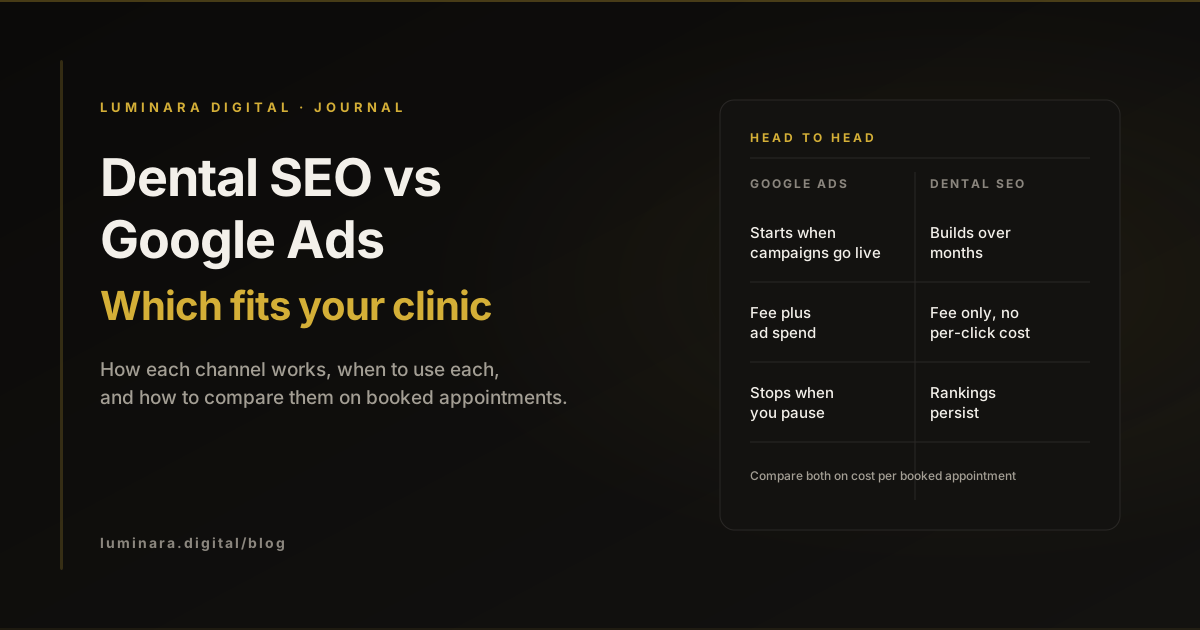
Ads
Enquiries can start once campaigns and tracking are live
SEO
Builds over months; rankings persist when spend pauses
Both
Weighted by cost per booked appointment, not by habit
1. Quick Verdict: Which Channel Wins?
Neither wins outright - they solve different problems. Google Ads is the right tool when you need patients now: a new clinic, a slow month, a new treatment you're launching. SEO is the right tool when you want to reduce your long-term cost per patient and build an asset that works without a per-click cost.
Many clinics that grow steadily run both channels, in proportions that suit their growth stage. A clinic that runs only Google Ads stays dependent on ad spend. A clinic that runs only SEO waits months for results and leaves immediate bookings on the table.
A practical split for most Australian dental practices: Google Ads from day one for immediate patient flow, SEO running in parallel, and a gradual rebalancing toward SEO once organic rankings are established and measured.
2. Google Ads vs Dental SEO: Head-to-Head
This comparison describes how the two channels behave for Australian dental clinics in metro markets. Timing and cost depend on your suburb, competition and starting point, so treat it as a guide to the trade-offs rather than a forecast.
Time to first enquiry
- Google Ads
- Soon after campaigns and tracking go live
- Dental SEO
- Months, depending on competition and starting point
Monthly ongoing cost
- Google Ads
- Management fee plus ad spend
- Dental SEO
- Management fee only
Cost per lead
- Google Ads
- Set by click cost and landing page conversion rate
- Dental SEO
- No per-click cost; the cost is the ongoing work
What happens when you pause
- Google Ads
- Traffic stops immediately
- Dental SEO
- Rankings persist (short-term)
Google Maps 3-Pack
- Google Ads
- Not included (Local Services Ads are separate)
- Dental SEO
- Core deliverable; timing depends on competition
AI platform visibility
- Google Ads
- Not applicable
- Dental SEO
- Yes - via AEO and structured data
Compounding returns
- Google Ads
- No - linear cost curve
- Dental SEO
- Yes - authority builds over time
Best for new clinics
- Google Ads
- Yes - immediate patient flow
- Dental SEO
- Slower start, no authority yet
Best for established clinics
- Google Ads
- Yes - for high-value campaigns
- Dental SEO
- Yes - lowers long-term cost per patient
3. Google Ads for Dentists: What to Expect
Setup: keyword research, a negative keyword list, a landing page per treatment group, and conversion tracking (call tracking, GA4 events). No spend until the foundation is right.
Learning phase: after launch, Google's bidding needs conversion data to optimise. Expect the first weeks to be uneven while the algorithm learns which keywords and audiences book.
Optimisation: with conversion tracking in place, you can see which keywords generate phone calls and bookings and which only generate clicks. Remove what doesn't book and move budget to what does.
Steady state: a well-managed campaign settles into a predictable cost per enquiry. If your cost per enquiry keeps rising month after month, something is structurally wrong.
What Google Ads cannot do: build your Google Maps ranking, generate AI platform citations, or provide compounding returns. Every patient acquired through Google Ads costs money. There is no equity in ad spend - it is a tap that runs only while you pay.
4. Dental SEO: How It Builds Over Time
Foundation: site audit, crawl error fixes, Core Web Vitals, Google Business Profile setup, dental schema markup, and consistent listings on the directories that matter for your area.
First movements: long-tail keywords (e.g. 'Invisalign cost Richmond VIC', 'emergency dentist open Saturday South Yarra') start appearing on page 1 or 2, and your Business Profile gains impressions.
Local pack: with a strong Business Profile, steady new reviews and relevant treatment pages, the clinic starts appearing in the Maps 3-Pack for some suburb-level searches. This is usually when organic calls become measurable.
Core terms: over a longer period, core commercial keywords ('dentist [suburb]', 'dental clinic [suburb]') can reach page 1. Structured, well-sourced content also makes it easier for AI assistants to describe the clinic accurately.
Important caveat: this only happens with a properly executed SEO programme, not just monthly blog posts. Dental SEO needs ongoing Business Profile management, treatment page content, review acquisition, local listings and technical health monitoring. How long each stage takes depends on your suburb and competitors, so ask for progress to be reported against measured rankings and calls, not promised dates.
5. How to Compare the Two Over 12 Months
Measure both channels on the same number: cost per booked appointment. For Google Ads that is ad spend plus management fee, divided by bookings from ads. For SEO it is the SEO fee divided by bookings from organic search and your Business Profile.
Track it monthly. Google Ads usually reaches a steady cost per booking quickly; SEO starts expensive per booking (fees with few bookings) and gets cheaper as rankings build. The point where SEO's cost per booking drops below Google Ads' is when to start shifting budget.
Record what you have built as well as what you spent. Paused ads leave nothing behind; SEO leaves rankings, reviews and content that keep working. Both matter when you decide where next quarter's budget goes.
Conclusion
The question isn't Google Ads or SEO - it's how to allocate your budget across both channels to get the most booked patients per dollar at your stage of growth. New clinics usually need Google Ads first. Established clinics need SEO to reduce long-term cost per patient. Growth-stage clinics need both, with spend weighted by measured cost per booked appointment rather than guesswork. At Luminara Digital, we set up tracking that shows cost per booked appointment for each channel. In a free 30-minute review, we can show you where your biggest opportunity is right now - whether that's fixing a Google Ads campaign, getting into the Maps 3-Pack, or building your first treatment-specific pages.
Common questions
Usually Google Ads. A new clinic has no domain authority, no Google Business Profile history, no reviews and no existing rankings, so SEO takes months to produce results from a blank slate. Google Ads can produce first enquiries soon after going live. Start with Google Ads for patient flow, run SEO in parallel to build the long-term asset, and revisit the split once you can compare cost per booked appointment for each.
There is no reliable universal answer: it depends on your suburb, how competitive the core keywords are, your starting point and how much work goes into the programme. Measure organic bookings each month and compare cost per booked appointment across both channels; that tells you when SEO has caught up for your clinic.
The Google Maps 3-Pack is the block of three local business listings shown near the top of Google results for local searches like 'dentist near me' or 'dentist Richmond VIC'. It is prominent, it shows reviews and a call button, and it is mainly an SEO outcome (driven by your Business Profile, reviews and local relevance) rather than something you can buy with standard Google Ads.
Yes - and most growth-stage practices should. Running both gives you immediate patient flow from Google Ads while building long-term organic equity through SEO. The two also inform each other: Google Ads data shows which keywords book appointments, which guides your SEO content, and better landing pages can improve your Quality Score.
Once rankings are established, SEO has no per-click cost, so the cost per enquiry is the monthly SEO fee divided by the enquiries it produces. Early on that number is high because rankings are still building; it falls as organic enquiries grow. Track it monthly alongside Google Ads so you are comparing measured numbers, not estimates.
Tags: Dental SEOGoogle AdsDental MarketingAustraliaPPC vs SEO